Saturday, 7 June 2025

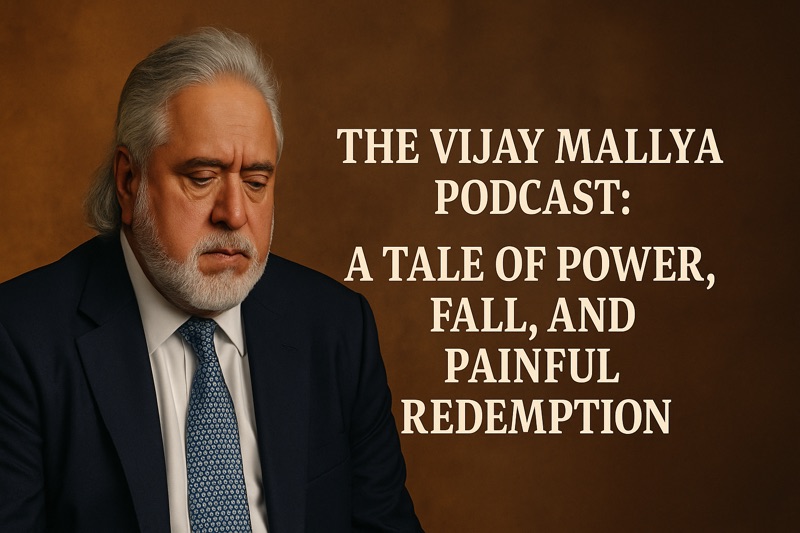
The Vijay Mallya Podcast: A Tale of Power, Fall, and Painful Redemption

It’s rare for a podcast to leave you with a lump in your throat, a heaviness that lingers long after the voices fade. Raj Shamani’s four-hour conversation with Vijay Mallya is one of those rare moments—a raw, unfiltered descent into the heart of a man who once soared above India’s elite, only to crash into a solitude so profound it’s almost palpable. This isn’t just an interview. It’s a requiem for a life lost, a confession laced with regret, and a fragile plea to be seen as more than a villain.

## From the Throne to the Shadows

Vijay Mallya was once a king in every sense of the word. The “King of Good Times,” they called him—a title he wore like a crown, glittering with the success of the United Breweries Group, the frothy triumph of Kingfisher Beer, the soaring ambition of Kingfisher Airlines, and the roaring crowds of his IPL team, Royal Challengers Bangalore. His life was a tapestry of extravagance: private jets slicing through the sky, yachts drifting on endless horizons, parties where champagne flowed like rivers. He was untouchable, a man who turned dreams into empires with a flick of his wrist.

But empires crumble. Today, Mallya sits alone, far from the spotlight, in a self-imposed exile that feels more like a prison. The podcast opens a window into this fall—a descent from dazzling heights to a quiet, shadowed existence. His voice, once a booming anthem of confidence, now trembles with vulnerability. His eyes, which once danced with mischief, are dimmed by the weight of years spent running, hiding, and remembering. This is not the Mallya of headlines. This is a man broken by his own story, a ghost haunted by the life he left behind.

## A Cry Against the Wind: “I Tried to Pay”

The collapse of Kingfisher Airlines isn’t a secret. The unpaid debts, the fugitive tag since 2016, the media’s relentless vilification—it’s a narrative etched into India’s collective memory. But in this podcast, Mallya doesn’t duck or weave. He faces it head-on, his words cutting through the noise like a desperate hand reaching out from the wreckage.

“I tried to pay,” he says, and you can hear the ache in his voice, the strain of a man who feels unheard. Between 2012 and 2015, he claims he offered to settle his dues with the banks—not once, but multiple times. Offers, he says, that were brushed aside, rejected like a beggar’s plea. Is it the full truth? The courts will decide that. But when he speaks, with moist eyes and a voice that falters, it’s not the tycoon talking—it’s a man begging to rewrite the story that’s defined him. “What exactly did I steal?” he asks, and it’s not defiance. It’s a wound laid bare, a question that echoes in the silence. He’s not asking for absolution. He’s asking to be heard.

## The Loneliest Goodbye

The podcast doesn’t linger on balance sheets or legal battles alone. It dives deeper, into the soft, bruised places of Mallya’s soul. He speaks of isolation—of living a life severed from the land he once ruled, from the family he once held close. The billionaire tycoon is gone, replaced by a man who watches from a distance as his world unravels, piece by piece.

Then comes the moment that cracks the armor entirely. He talks about his mother’s death, the day she slipped away while he was trapped thousands of miles from home. “I couldn’t even say goodbye,” he whispers, and the words catch in his throat like shards of glass. It’s a confession that strips him down to his core—a son who couldn’t kneel at his mother’s grave, a father whose children know him now through headlines and whispers. In that tremble, you see not the “King of Good Times,” but a man drowning in grief, clutching at memories he can’t reclaim. It’s a pain so universal, so human, that it forces you to pause. Whatever you think of his sins, this is a loss that bleeds.

## A System That Swallows Dreamers

Mallya’s voice hardens when he turns to India’s business landscape. “It’s a myth,” he scoffs, “this so-called ease of doing business.” It’s not just bitterness—it’s a lament, a cry from someone who’s felt the suffocating grip of bureaucracy, the endless tangle of red tape that strangles ambition. He’s not alone in this. His words resonate with countless entrepreneurs who’ve dared to dream big in a country where success is a tightrope walk, and failure a freefall with no net. Mallya’s story becomes more than personal—it’s a mirror held up to a system that builds heroes only to break them, a warning carved in the ruins of his empire.

## The Other Side of the Coin

But there’s another layer, one Mallya can’t erase with his tears or his pleas. The employees who went unpaid, the creditors left grasping at shadows—their pain is real, their losses raw. This podcast may center on Mallya’s voice, but their silence looms large. He doesn’t deny the mistakes, the decisions that spiraled out of control, the lives caught in the wreckage. His story isn’t a bid for innocence—it’s a thread in a tapestry far more tangled than any headline can capture. Villains and victims blur here, and the truth sits somewhere in the messy, aching middle.

## A Man, Not a Monster

As the hours wind down, you’re left with a portrait that defies the caricature. Is Vijay Mallya a victim, crushed by circumstance and a ruthless system? Or is he the architect of his own ruin, a man undone by hubris and excess? Maybe he’s both. The podcast doesn’t hand you answers—it hands you questions, wrapped in the quiet tremor of his voice and the weight of his solitude.

This isn’t about forgiveness. You don’t have to absolve him, to erase the debts or the damage. But if you walk away still seeing only a thief, a fraud, a punchline, then perhaps you missed the heartbeat beneath the noise. Vijay Mallya is flawed, fractured, and achingly human—a man who reached for the stars and fell into the abyss, now stretching out a trembling hand for understanding, if not redemption.

## The Echoes That Stay

Raj Shamani’s podcast isn’t just a conversation—it’s a journey into the fragility of power, the crushing weight of failure, and the faint, flickering hope that lingers even in exile. It’s a story that doesn’t end when the audio stops. It follows you, whispering in the quiet: What if we’ve misjudged? What if behind the headlines was a man who tried, who failed, who mourns? Vijay Mallya’s tale is a tragedy—not of wealth lost, but of a life unraveled, thread by fragile thread, until all that’s left is a voice, pleading softly into the void.
Wednesday, 18 December 2024

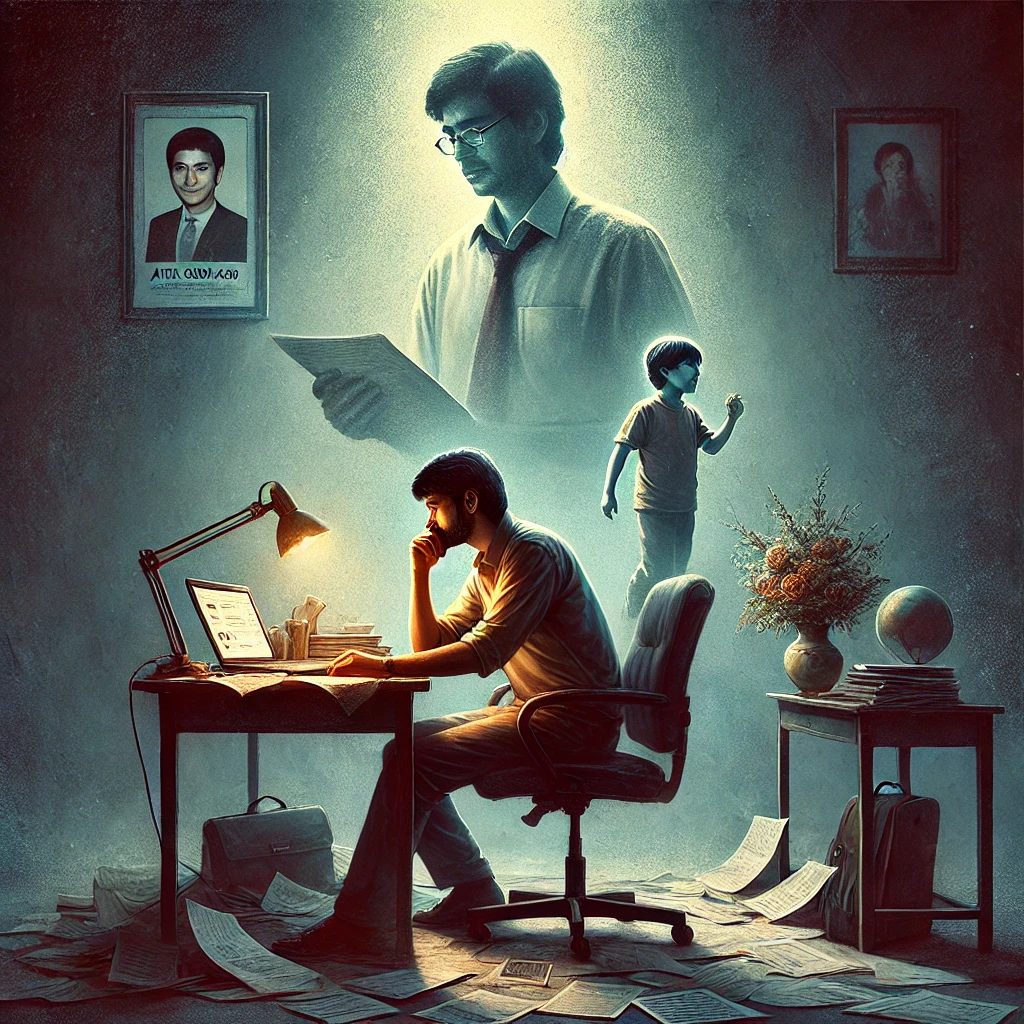
“A Tribute to Atul Subhash: The Unheard Cry of a Tormented Soul”

In the bustling city of Bangalore, a man named Atul Subhash—a brilliant engineer, a techie, a father—silently bore a weight so heavy that it ultimately crushed him. On the surface, he was one of many—a professional navigating the demands of a competitive world. But beneath this facade, he was fighting a battle no one could see, one that ultimately claimed his life.


Atul’s story is one of unimaginable pain, betrayal, and the failure of a system that is meant to protect. A man who worked tirelessly to build a life of stability and dignity was pushed to his limits, cornered by circumstances that no one deserves to face.


The Price of Love and Betrayal


Atul’s life took a devastating turn when his marriage, once a partnership of dreams, became a nightmare. His wife, the person he once trusted with his heart and his life, allegedly demanded an exorbitant ₹3 crores as alimony—a demand so extreme it defies comprehension. This was not just a financial blow; it was an attack on his very identity as a provider, a father, and a human being.


What broke him further was the denial of the simplest yet most profound human connection—the right to see his own child. The love of a father, the joy of holding his little one, was snatched away from him. He was left with empty hands and a shattered heart, forced to live with a pain that words cannot capture.


The Crushing Weight of Expectations


Atul was more than just an engineer; he was a man with dreams, a person who worked hard to achieve success, and someone who believed in the dignity of relationships. But the societal expectations placed on men, coupled with a system that can be unforgiving, left him with no escape.


He endured relentless harassment—legal, emotional, and social. A father stripped of his rights, a man burdened by demands beyond his capacity, Atul found himself trapped in a vortex of despair. His education, his achievements, and his integrity could not shield him from the injustices that ultimately drove him to take the most tragic step of all.


A Silent Plea for Justice


Atul’s story is not just his own; it is the story of countless men who face similar struggles, silently bearing the weight of expectations, accusations, and injustices. His death is a reminder of the gaps in our system, of the urgent need to reevaluate laws and societal attitudes that can be weaponized to destroy lives.


While laws exist to protect, they must not be blind to the possibility of misuse. Atul’s case reveals a cruel reality: that justice, when skewed, can become a tool of oppression. His life was a plea for fairness, for understanding, and for compassion—pleas that went unheard.


Remembering Atul Subhash


Atul Subhash was a man who deserved better. He deserved a life of dignity, the joy of watching his child grow, and the freedom to live without fear or coercion. He was an engineer, a father, and above all, a human being whose value went beyond the roles society assigned him.


As we reflect on his life, let us remember him not just as a victim, but as a symbol of the need for change. Let his story ignite conversations about fairness and justice, about the importance of listening to the silent struggles of men, and about building a system that does not fail its people—regardless of their gender.


Atul Subhash, your story will not be forgotten. Your pain will not be in vain. Let this tribute stand as a reminder of the humanity we owe to one another, and as a call for a society where no one feels as hopeless and abandoned as you did.


May you find peace, Atul. And may your story inspire the change you deserved.

Tuesday, 17 December 2024

The Stories Left Behind in Our Clothes

Today started as a routine day—a seasonal ritual, really. I was swapping summer for winter, pulling out cozy sweaters and stashing breezy fabrics into my bed box. But as I packed those bags full of summer clothes, I paused. I looked at them—each bag neatly tucked away, ready to be forgotten for the next few months—and something struck me so deeply that I couldn’t move.


It’s strange how life offers such moments, seemingly out of nowhere. As I stood there, staring at these bags of fabric and thread, my mind drifted to something hauntingly real.


What happens to the clothes of people when they are no longer alive?


It’s a thought we rarely linger on, yet it holds so much weight. After someone dies—when their laughter fades from rooms and their presence becomes memory—what happens to the parts of them they’ve left behind? Their clothes, folded neatly in a closet, smelling faintly like them. The shirt they wore on a sunny Sunday. The sweater they snuggled in during cold winters. The dress that made them feel beautiful.


Do their families gather these clothes the way I was packing mine today? Carefully folding, with trembling hands? Do they press a sleeve to their face, breathing in the scent, as if trying to hold onto a piece of that person one last time?


Maybe some clothes are given away. A favorite jacket, now worn by someone who never knew its original owner. Maybe some are packed into boxes and left in storage—silent, untouched, holding stories no one speaks of anymore. Or perhaps some families cannot bear to part with them, leaving the wardrobe as it is, like a shrine to a life that once filled their home with warmth.


Clothes are so deeply personal, yet we rarely see them as more than things. In reality, they are storytellers. Each piece carries a moment: a vacation, a celebration, a lazy day, a heartbreak. I wonder, do these stories end when a person does? Or do they linger—alive in the folds and seams, waiting to whisper to someone who holds them next?


And what of my own clothes? Someday, who will open my boxes and bags, and what will they see? A collection of fabrics? Or will they see me—the memories, the life, the laughter, the love that I once carried while wearing them?


Life feels fragile in these thoughts. It reminds me of how little we truly own, even when we think we do. Clothes, just like everything else, are temporary companions on this journey. Yet somehow, they hold an essence of permanence. They outlive us, carrying echoes of who we were long after we’re gone.


Today, as I closed the bed box, my heart felt heavy. But it was also full of gratitude—gratitude for the life I get to live and for all the small, beautiful moments my clothes have witnessed. They’ve been with me through seasons of growth, change, and stillness. And while I don’t know what becomes of them once I’m gone, I know they will have held a piece of my story.


Maybe that’s all we can hope for—that the things we leave behind, even something as simple as clothes, will tell someone, somewhere, that we were here. That we lived. That we mattered.


And maybe that’s enough!!!

Wednesday, 19 April 2023

“Sun Protection Essentials: The Importance of Sunscreen and Reapplication”

Sunscreen is an essential step in protecting your skin from the harmful effects of the sun’s ultraviolet (UV) rays. UV radiation can cause a range of skin damage, including sunburn, premature aging, and an increased risk of skin cancer. Regular use of sunscreen with a high SPF (sun protection factor) helps block harmful rays, reducing the risk of these issues.


In addition to protecting against UV radiation, sunscreen also helps prevent hyperpigmentation, which can lead to dark spots and an uneven skin tone. It plays a crucial role in preventing skin dehydration, keeping your skin looking fresh, youthful, and healthy.


To maintain effective protection, it’s vital to apply sunscreen regularly, especially when spending extended periods outdoors or engaging in activities that involve water or sweating. The American Academy of Dermatology recommends using a broad-spectrum, water-resistant sunscreen with an SPF of 30 or higher. Be sure to reapply every two hours or immediately after swimming or sweating to ensure continued protection.


Reapplying sunscreen is crucial because its effectiveness can diminish over time, particularly when exposed to water, sweat, or physical contact that may rub it off. Without reapplication, your skin becomes vulnerable to UV damage, which can lead to sunburn, premature aging, and an increased risk of skin cancer.


Sunscreen works by either absorbing or reflecting UV radiation before it can penetrate the skin. However, over time, sunscreen can break down, and UV radiation can degrade the ingredients, reducing its effectiveness. To maintain adequate protection, reapplying sunscreen every two hours is key. This is particularly important when you’re spending time in the sun for extended periods or engaging in water-related or sweaty activities that wash away sunscreen.


Keep in mind that for each application, the recommended amount of sunscreen for an adult is about one ounce (roughly a shot glass full). By using enough product and reapplying every two hours, you can effectively shield your skin from the harmful effects of UV radiation and maintain healthier, more resilient skin.


“Mindful Skincare: Nurturing Your Skin and Soul”

Skincare is more than just a routine; it’s a mindful practice that nurtures not only our skin but also our well-being. Caring for your skin allows you to connect with yourself in a deeper way, embracing the opportunity to slow down, appreciate the moment, and tend to your body with love and intention.


Here are some mindful tips to help you achieve your best skin:


Cleanse: Cleansing is the foundation of a good skincare routine. It’s a simple act of letting go of the impurities from the day—dirt, oil, stress. As you gently cleanse, take a moment to breathe deeply and reflect on releasing anything that no longer serves you. Use a cleanser suited to your skin type and rinse with lukewarm water, embracing the refreshing feeling of starting anew.


Exfoliate: Exfoliating is a chance to renew and refresh your skin. It helps shed dead skin cells and allows your skin to breathe. Be mindful of how your skin feels—gently exfoliate once or twice a week, respecting the delicate balance of your skin. Choose a gentle scrub or chemical exfoliant that suits you, and approach it with care, knowing that overdoing it can be harsh on your skin.


Moisturize: Moisturizing isn’t just about hydrating your skin; it’s about nurturing yourself with self-compassion. Hydration supports the skin, but it also serves as a reminder to nourish your body from the inside out. Choose a moisturizer with ingredients like hyaluronic acid or ceramides, and take a few moments to gently massage it into your skin, feeling the love and care you’re giving yourself.


Protect: The sun is beautiful, but its rays can also be damaging. Protecting your skin is an act of self-preservation. Apply sunscreen with an SPF of 50 or higher, even on cloudy days, and embrace the ritual of shielding your skin from the harsh elements. Take this as a moment to reflect on the importance of caring for yourself every day.


Treat: If you have specific skin concerns, targeted treatments are a way to honor your skin’s needs. Whether it’s acne, dark spots, or fine lines, address these areas with treatments like salicylic acid, retinol, or vitamin C. Be mindful of what your skin is telling you and tailor your products to its unique needs.


Beyond the steps and products, mindful skincare means being attuned to your skin’s rhythms. Understand what it needs at different times—whether it’s more hydration, a gentle touch, or a break from certain treatments. Pay attention to how your skin reacts, and adjust accordingly.


Finally, remember that skincare is not just about the products. It’s a holistic practice that extends to your lifestyle. Eating nourishing foods, getting restful sleep, and managing stress are equally vital for healthy, glowing skin. Mindfulness in your diet, exercise, and emotional well-being all contribute to how your skin feels and looks.


In conclusion, skincare is an act of self-care that nurtures both your skin and your soul. By creating a mindful routine and living in alignment with your body’s needs, you can achieve your healthiest, most radiant skin. Take the time to appreciate your skin as a reflection of your inner self, and remember that true beauty comes from balance, self-love, and mindfulness.

Tuesday, 28 June 2022

“Rising Through the Shadows: A Chapter of Faith and Resilience”

Let me take you through the most difficult time in my life—the one I’m living through right now. I’m sitting here with disappointments and failures piled up in my hands, and it’s already the year 2022. It feels like failure has become a daily ritual, one that refuses to end. They don’t just happen once; they keep repeating, as if on an endless loop.


Right now, I hate my life. I don’t even know if sharing this makes sense because it feels like I’m just spilling out raw, messy thoughts. But maybe that’s what this phase of life is—unfiltered, raw, and painfully real.


Let’s face it: life is nothing like the perfect stories we see in TV shows or movies. Ever watched Emily in Paris? She lives this dream-like, glamorous life, full of opportunities and excitement. But in reality, life doesn’t come wrapped in glitter. Real success demands hard work. It’s exhausting, and the setbacks can shatter your heart.


And then there are the people—the ones who change when life gets tough. They pull away or act differently, leaving you to figure it all out alone. But you know what? I never expected anything from them. “They” aren’t just one person—they’re a collective of people, faces that blur together.


So here I am, trying to stand up on my own. “Get up, girl,” I tell myself. “Wipe those tears and remind yourself who you are.” It’s not some grand, motivational moment, but it’s all I have right now.


And yet, deep down, I know my time will come. Not today, maybe not tomorrow, but someday. I trust that, and I hold on to that belief.


One day, I’ll look back on this chapter and feel proud of myself—proud that I survived, that I didn’t give up. That’s why I keep going. All I need to do is stay true to my dreams, no matter how impossible they feel right now. And so I will.


                .


Tuesday, 8 March 2022

The Unheard Struggles of Women: A Call for Change

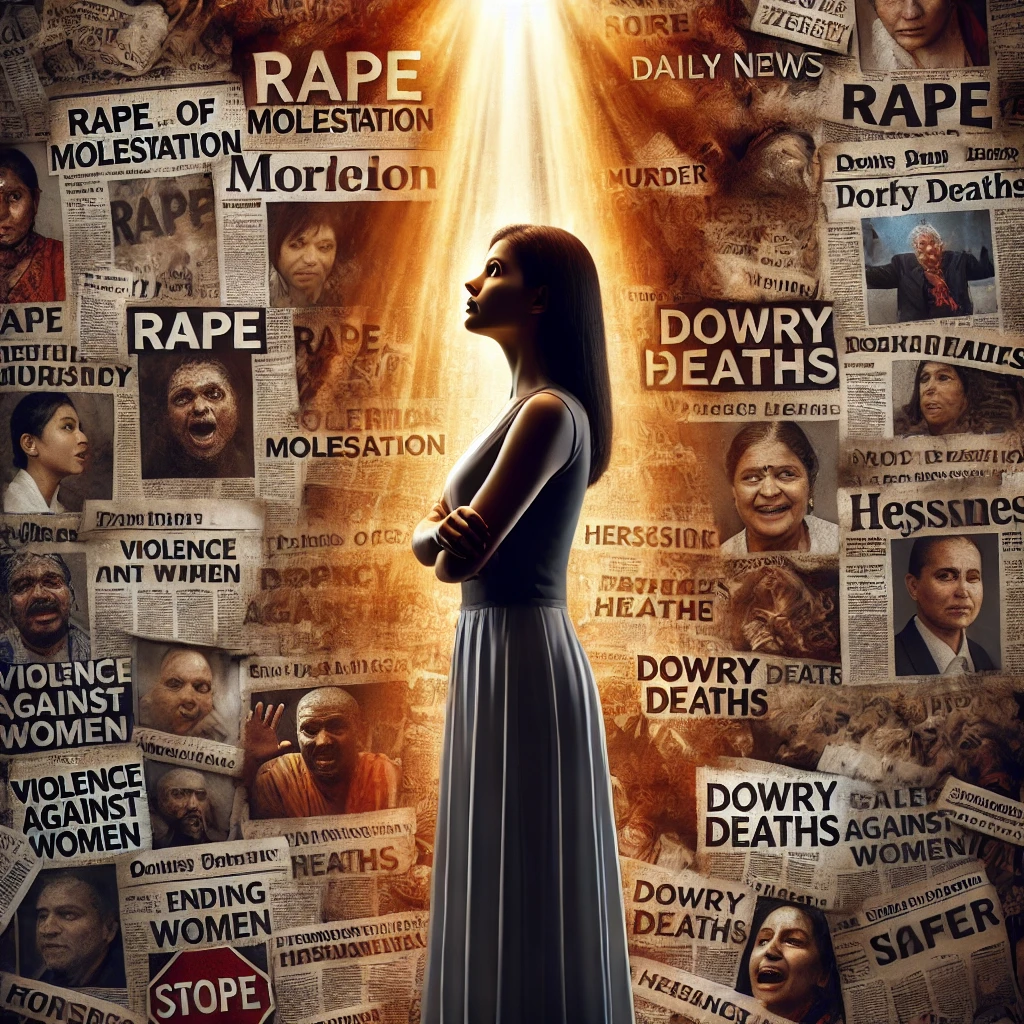
What can we say, and where do we begin? Every day, the news brings us heartbreaking stories of violence, abuse, and injustice against women—stories that are far too common. These are not just stories; these are the lived realities of countless women, who are suffering in silence.


We hear about rapes, murders, molestations, dowry-related deaths, and eye-teasing every single day. These are not isolated incidents; they are the dark, painful truths that women face daily. We often hear the statistics, but behind every number is a human life, a story of pain and loss.


The most shocking part? It often feels like society is numb to it. Women are blamed, shamed, and silenced while the perpetrators go free or receive minimal punishment. How long will we let this continue?


Women are not just victims; they are survivors. But survival is not enough. We need change. We need a society where women don’t have to fear for their safety, where their voices are heard, and their rights are protected.


We need to ask ourselves: What kind of society are we building? A society where women walk in fear, or one where they are free to live, thrive, and achieve their full potential without the constant threat of violence and abuse?


It’s time for all of us to take action. To speak out, to stand up, and to fight for the women who are suffering. We need to stop normalizing violence and start holding the abusers accountable. Only then can we create a world where women can truly feel safe, respected, and valued.


This isn’t just a woman’s issue—it’s a societal issue. The time to act is now. Let’s stand together and demand change.

Tuesday, 7 July 2020

Aerogel looks like a slice of cloud.


The term Aerogel comes from two words – Air and Gel. And there is history to that name!

  • Aerogel is an ultralight material made from gel and gas. It's been nicknamed "frozen smoke" or "solid cloud" because of its ethereal appearance.
  • Scientists have created more than a dozen recipes for different types of aerogel, but they all share a similar process: mix chemicals together, let them settle into a wet gel, and then suck all of the liquid out. The result is a substance of extremely low density that is actually 99 percent air.
  • Because it's made primarily of air and air is such a terrible heat conductor, placing a layer of Aerogel between a flower and a flame will protect the flower from getting destroyed.

Monday, 6 July 2020

NATRAJASANSA YOGA

Natarajasana, Lord of the Dance Pose or Dancer Pose is a standing, balancing, back-bending asana in modern yoga as exercise. It is derived from a pose in the classical Indian dance form Bharatnatyam, which is depicted in temple statues in the Nataraja Temple, Chidambaram.


BENIFITS OF THIS YOGA POSE:- Practicing this asana gives strength to your chest, ankles, hips, and legs.

1) This asana increases your metabolism and helps in weight loss.

2) It gives your groin, abdominal organs, and thighs a good stretch.

3) Your posture is improved, and balance is increased.

4) It helps better your digestion.

5) You tend to focus more and are also relieved of stress. This asana calms your mind.

6) Your body becomes flexible.

7) Your hip flexors are opened up.

8) Practicing this asana gives strength to your chest, ankles, hips, and legs.


What You Should Know Before You Do This Asana? 

This asana must be practiced on an empty stomach. You must make it a point to have your meals four to six hours before the practice so that the food is digested and the energy is ready to be expended. Also, make sure your bowels are empty before you practice.

Yoga must be practiced at dawn or dusk for best results.

The Science Behind The Natarajasana:-

This asana is a beautiful combination of structure and movement, and it symbolizes the dance of the graceful Nataraja. It helps to make you strong, and opens up your mind and body, giving them so much grace and power. It is a deep backbend. 

As you bend and your body balances on one leg, you are constantly challenged. When you overcome the challenge, you attain a sense of peace and calm. This asana opens up the heart. It asks of us to be stable but at ease, dedicated, yet non-attached, engaged, yet at peace. 

When we are open to and accept both movement and structure, this asana helps draw a clear communication between our being and the teacher in the heart.


Debunking Myths About White Rice

White rice is a staple food for many, but it’s often misunderstood. Let’s clear up some common myths:

1. White Rice is Unhealthy: White rice provides essential carbohydrates and energy. When eaten in moderation and as part of a balanced diet, it can be healthy.

2. White Rice Causes Weight Gain: Weight gain happens when you consume more calories than you burn. Portion control matters more than avoiding white rice.

3. White Rice Has No Nutritional Value: White rice is a good source of energy and contains essential nutrients like manganese and iron. Many varieties are also enriched with folic acid.

4. Brown Rice is Always Better: While brown rice has more fiber, it may not be suitable for everyone. Both types have their benefits, so it’s a matter of personal preference.

5. White Rice Spikes Blood Sugar: Though white rice has a higher glycemic index, combining it with other foods like vegetables or proteins can help control blood sugar levels.

6. White Rice Should Be Avoided on Low-Carb Diets: White rice can be part of a balanced diet if consumed in controlled portions, even for those watching their carbs.


In conclusion, white rice isn’t as bad as it’s made out to be. Like any food, it’s all about how and how much you eat.


“Understanding Intermittent Fasting: Benefits and Considerations”

Intermittent fasting is a type of eating pattern where you cycle between periods of eating and fasting. It’s not about what you eat, but rather when you eat. There are different methods, like fasting for 16 hours and eating within an 8-hour window (16/8 method) or fasting every other day.


Many people use intermittent fasting to help with weight loss, improve metabolism, or even boost energy levels. It can also help with regulating blood sugar levels and improving heart health. However, intermittent fasting may not be suitable for everyone, and it’s important to listen to your body.


Before trying intermittent fasting, it’s a good idea to consult a healthcare professional, especially if you have any health conditions or concerns. It’s important to stay hydrated during fasting periods and make sure your meals are balanced when you do eat.


Wednesday, 15 August 2018

“Stained with Blood: A Kashmir Story of Loss and Hope”

Last August, the blood in my land did not shed; it froze. In people’s eyelids, there were marks on their faces. The authorities say they have employed forces to bring peace.


Sofie cannot walk from one room to another without the support of the walls. She doesn’t know the meaning of the word ‘handicapped.’ She is young, and her self-esteem is yet to be injured.


The young army man’s heart is broken as he finds himself amidst a turbulent mob. The Kashmir he imagined and the Kashmir he has seen are vastly different. He will not be able to bring his family here and show them the snowfall on the hills of Gulmarg.


And those two brothers, whose coach thought they would become cricket’s next big stars, are now saddened every time they read the newspaper or hear the noise of a cricket match.


Their grandfather writes letters to the government regularly, saying, “Dear Prime Minister, why do you take the sins of so much destruction upon yourself?”


“It is just a piece of land that distresses you, troubles the army, and brings suffering upon us. Let’s split it up into two and gift half a heaven to Karachi and half a heaven to Delhi, leaving the people to see good days with their ears.”


Last August, in my land, another page was torn from the book of hope. A page in which we could have written promises, given assurances that our children would not be raised under the shadow of weapons. The leaves that fall from trees will not be drenched in blood.


Last August, the blood that shed in my land was ours…


#6,221 pellet gun injuries reported in unrest after Burhan’s killing.

#India revises Kashmir death toll to 47,000.

#8-month-old killed, 6 injured as Pak troops fire at border posts and villages in Jammu.

#167% increase in civilian deaths in Kashmir.

#185 soldiers killed in Jammu and Kashmir in the last 3 years.


THIS YEAR, WE CELEBRATE 72 YEARS OF INDEPENDENCE,

WHILE JAMMU AND KASHMIR IS STAINED WITH BLOOD.


जिन्हें नाज़ à¤¹ै हिन्द पर वो कहाँ हैं ?

Wednesday, 13 June 2018

The Depth of Desire and Hate: A Reflection on “Fire and Ice”


Some say the world will end in fire, and others say in ice. These words from Robert Frost’s poem, famously featured in Game of Thrones, are much more than just poetic imagery; they carry deep layers of meaning about human nature, emotions, and the destructive forces that shape our world.


“From what I’ve tasted of desire, I hold with those who favor fire.” Desire, as the poem suggests, is an intense, consuming force. It can ignite passion, ambition, and creativity, but it can also burn through everything in its path. The fire symbolizes the fiery passions within us—the drive that pushes us to achieve greatness, but also the destructive force that can ruin everything we hold dear if unchecked.


Yet, the poem doesn’t stop at fire. It goes further, acknowledging the quieter, more insidious force of hate, represented by ice. “But if it had to perish twice, I think I know enough of hate to say that for destruction, ice is also great and would suffice.” Hate is colder, more calculated, and just as capable of destruction as the heat of desire. It may not be as obvious as fire, but its coldness and bitterness can slowly consume everything, like an ice age sweeping across the land. Hate, like ice, can erode the foundation of relationships, peace, and even societies over time, leaving nothing but emptiness and loss.


What I find so thrilling about this poem, especially in the context of Game of Thrones, is how it captures the two powerful emotions that have shaped human history—desire and hate—and the ways in which they both bring about destruction. In the world of Westeros, as in our own, we see how characters’ desires for power and revenge ignite fires, while their hates chill and destroy the very fabric of society.


When we think about this poem in our own lives, it serves as a reminder that both extremes—passion and hatred—are forces to be reckoned with. Whether it’s the heat of our desires or the coldness of our hatred, both can lead to the downfall of not just the world around us, but ourselves. And in the end, maybe the real challenge is finding a balance—one that doesn’t let fire consume us or ice freeze us, but instead allows us to live with compassion, understanding, and purpose.


This poem resonates so deeply because it’s a reflection of the human condition—our tendency to seek more, to desire, to feel, and sometimes, to hate. And in doing so, we often forget the cost of these emotions on both the world and ourselves.


Find Yourself

Go, find yourself—why are you so sad?

Even time is searching for your true purpose.


The chains that hold you back,

Don’t think of them as part of you.


Melt those chains,

And turn them into your strength.


When your heart is pure,

Why let the world bring you down?

Sinners have no right to judge you.


Burn away the web of suffering around you.

You’re not meant to be a symbol of worship,

But a force fueled by anger and passion.


Fly your scarf high like a flag,

Even the sky will tremble.

And if it falls,

An earthquake will shake the earth.


Go, find yourself—

Don’t be disheartened.

Time itself is searching for you,

And you are destined for greatness.

“Why Die Young? Embrace Life and Love Yourself”

Hey beautiful people out there,

I’m back here after a long time. I’ve been really busy over the past few days, but today I want to talk about something truly important: suicide.


WHY DIE YOUNG???


Lately, many young people have been struggling with thoughts of ending their lives. They try to cut their veins, or even hang themselves, but why? Why is this happening?


Listen up—committing suicide is not the solution. It’s a big NO!


Are you a loser?

I promise you, you are not a loser.

Come on, guys, losers quit, but winners don’t!


My beautiful people, you’re strong, you’re young, you’re worth this life, and you are exactly who you are. Love yourself. ❤️

You must be an inspiration to so many out there. There are countless people who want to be like you. You don’t have to give up. Instead, stand up for yourself and show the world who you really are. You’re a hero, a fighter, a winner!


Why, people, why? You don’t have to die young. My loves, life has so much more to offer.


WHY DIE YOUNG?

When there are songs you haven’t sung,

And places you haven’t been!


WHY DIE PRETTY?

When there’s a world outside the city,

People you haven’t met,

And secrets you haven’t kept!


WHY DIE SO FAST?

These moments will pass.

There’s a book you’ll miss,

Coffee cups you haven’t kissed,

Meadows to walk through,

Children to talk to,

Books left to be read.

So why, why, do you wish to be dead?


WHY EVEN DIE?

When you can travel alone,

Leave this world,

Disconnect your phone,

Why cry over someone’s words,

When there’s someone’s “I love you” you haven’t heard?


Why miss a single piece of art?

Why miss the look in their eyes as you part?

Why sigh and say you’re dull,

When the sunshine shines from your skin?

Why get trapped,

Within a translucent glass of gin?


Why make them recite a eulogy,

While you lie in a casket beautifully,

Staring at that vein kissing that knife?

Think of all the things you’ll miss

If you end this life.


“IF I WERE YOU, I’D WAIT FOR THE SCARS TO FADE!”

IF I WERE YOU, I’D PUT DOWN THAT BLADE!


Please, I hope you all understand the value of your life. Start truly appreciating who you are. Never, ever, try to commit suicide.

Love yourself, bro. You are worth it!


Friday, 29 April 2016

“Reflections on Saving Earth: Are We Truly Committed?”

"Earth can satisfy every man's need but not every man's greed..."


HUG A TREE LET IT GROW FREE 

I prepared a speech on saving Earth for an interschool competition. I spoke passionately about the topic, but later, as I sat in a corner and reflected on what I had said, I questioned whether I truly meant it. The answer was no.


We, as humans, have become so selfish that we fail to comprehend the consequences of our actions. The truth is, we are unknowingly inviting the termination of our own existence. We talk about saving the Earth, but our actions tell a different story—one of neglect, exploitation, and disregard for the planet that sustains us.


If travelling was free you had never see me again

If Traveling Was Free, You’d Never See Me Again


Imagine a world where traveling is free—a world where the shackles of costs no longer hold us back from exploring the unknown. If that were the case, you’d probably never see me again. Why? Because I would be out there, discovering new places, meeting people, and experiencing the beauty this world has to offer.


The dream to travel the world has always been a part of me, a yearning to wander without borders, to immerse myself in different cultures, and to be a part of the vibrant, ever-changing tapestry of the world. From the serene beaches of Bali to the snow-capped peaks of the Swiss Alps, there’s so much I want to experience, so much I want to learn.


But for now, the dream remains just that—a dream. However, with hope in my heart and a passport ready for adventure, one day, I’ll step foot into those dreams. And maybe, just maybe, one day, I’ll never need to return.

The Vijay Mallya Podcast: A Tale of Power, Fall, and Painful Redemption

It’s rare for a podcast to leave you with a lump in your throat, a heaviness that lingers long after the voices fade. Raj Shamani’s four-hou...